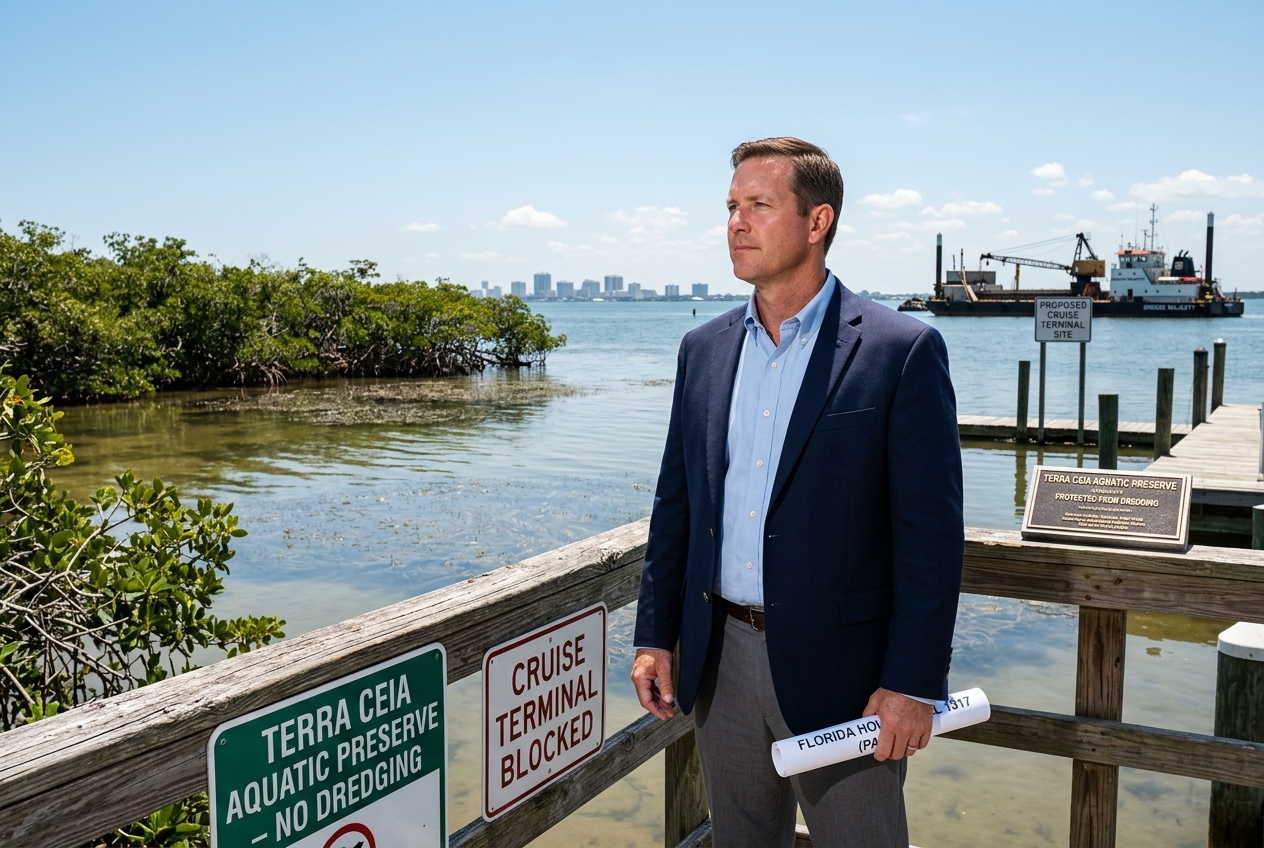
Wetlands or Red Tape: Manatee Commissioners Postpone Crucial Environmental Vote
In a recent development in Manatee County, Florida, commissioners have postponed a significant vote on reinforcing wetlands protection regulations, reflecting a growing tension between local governance and state policies. The commissioners planned to implement stricter buffer zones for developments near ecological wetlands, a move motivated by environmental conservation efforts and the need to mitigate flood risks in the hurricane-prone region. However, the decision was deferred following alerts that the proposed regulations might conflict with recent state laws targeting local land-use policies in hurricane-affected zones.
Governor Ron DeSantis has been at the forefront of this clash by asserting state authority over local decisions. His administration warns that local officials enacting policies that deviate from state statutes risk suspension. This approach aligns with the administration’s broader objective to maintain consistency in statewide environmental and developmental regulations, which they argue is crucial for economic stability and recovery in the aftermath of hurricanes.
The state’s stance is particularly stringent when it comes to land use in vulnerable areas, emphasizing rebuilding efforts and economic priorities. Codified in recent legislation, these policies are designed to standardize recovery strategies across Florida’s diverse jurisdictions. Yet, critics assert that such measures may undermine local efforts tailored to unique environmental challenges, such as the protection of wetlands which play a critical role in water filtration, habitat preservation, and buffering impacts from storm surges.
This ongoing debate underscores a pivotal issue in Florida: balancing economic development with sustainable environmental management. As local officials in Manatee County navigate this contested terrain, stakeholders continue to advocate for a resolution that equally prioritizes ecological stewardship and compliance with state directives. The outcome of this situation may influence local governance practices across Florida, setting a precedent for how environmental policies are crafted in the face of state intervention.


Echo in your Inbox
Echo is your Go-To Source for breaking local news without all the fluff.